Author: Triskele Heritage

  • Mediaeval Mythbusting: Archers & Arrowheads

    Mediaeval Mythbusting: Archers & Arrowheads

    The fifth in the Triskele Heritage 2021-22 Winter Series of lectures.

    Following on from the popular Lockdown Lectures which, ran from January to May 2021, this new series of monthly lectures by buildings archaeologist James Wright will examine commonly held myths about the mediaeval period.

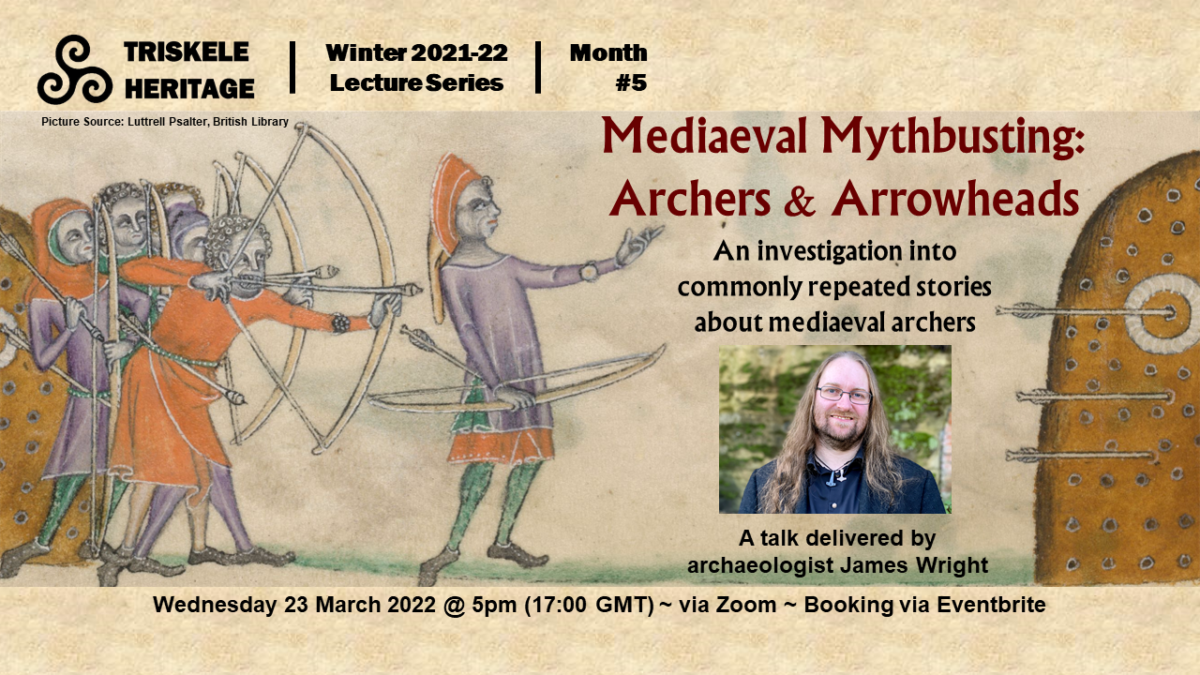
    The image of doughty English mediaeval archers is a common one that often inspires great pride and nationalistic fervour. Stories of the great arrow-storms which apparently defeated the French at Crecy or Azincourt are often told. Back at home, visitors to parish churches are frequently guided towards strange grooves in the walls which were apparently created by the very same archers whilst sharpening their arrowheads before going off to battle.

    However, much of what we think that we know about mediaeval archery is derived from received wisdom. Using a close examination of the contemporary sources, buildings archaeology, anthropology and experimental archaeology this talk will attempt to better understand the lived experience of soldiers of the period.

    The speaker, James Wright (Triskele Heritage), is an award winning buildings archaeologist. He has two decades professional experience of ferreting around in people’s cellars, hunting through their attics and digging up their gardens. He hopes to find meaningful truths about how ordinary and extraordinary folk lived their lives in the mediaeval period. He is the author of the popular Mediaeval Mythbusting Blog.

    All you need to do is register via Eventbrite and – when the time for the talk rolls around – grab your favourite beverage of choice, get comfy and enjoy.

    The event will take place at 17:00GMT on Wednesday 23 March 2022 .

    Booking is now available via Eventbrite.

    Due to our licensing agreement with Zoom tickets for each event will be limited to 495 places. If you cannot make it after booking, please do return your ticket so that someone else can enjoy the talk instead.

    Please note that this live event will not be recorded and made available online afterwards.

    If you have a question about the event – in the first instance please see our FAQs section. The answer will almost certainly be in there.

    *** If you have any problems accessing this event please email with your booking reference to james@triskeleheritage.com ***

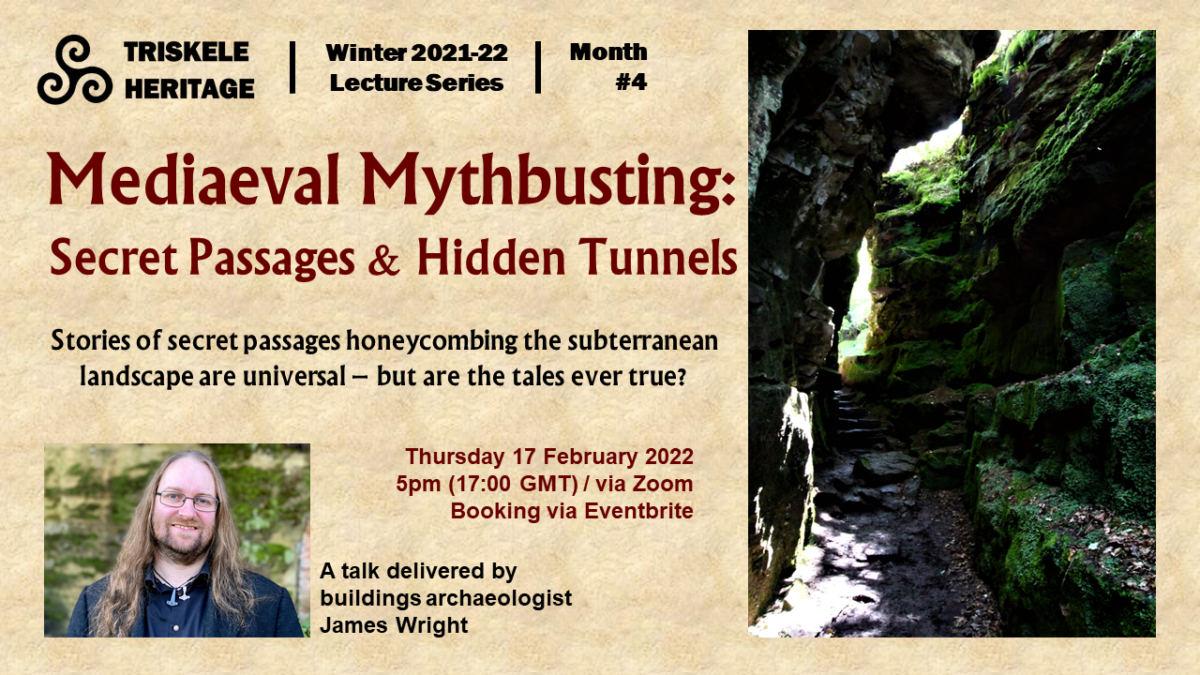
  • Secret Passages & Hidden Tunnels

    Secret Passages & Hidden Tunnels

    The fourth in the Triskele Heritage 2021-22 Winter Series of lectures.

    Following on from the popular Lockdown Lectures which, ran from January to May 2021, this new series of monthly lectures by buildings archaeologist James Wright will examine commonly held myths about the mediaeval period.

    Every single hamlet, village, town and city in the British Isles has a story of secret passages running beneath the landscape. The tales speak of hidden tunnels connecting the castle and the monastery, or the hermitage and the pub, or the church and the manor house. Often these are supposed to be escape tunnels, sometimes they are connected with smuggling or treasure, on other occasions the given reasons for their existence are somewhat salacious and scandalous.

    The folklore of Britain’s subterranean landscape is ubiquitous, but is there ever any archaeological evidence for these yarns? What are the underlying truths? Can the stories ever tell us something about how people think about their communities and heritage?

    The speaker, James Wright (Triskele Heritage), is an award winning buildings archaeologist. He has two decades professional experience of ferreting around in people’s cellars, hunting through their attics and digging up their gardens. He hopes to find meaningful truths about how ordinary and extraordinary folk lived their lives in the mediaeval period. He is the author of the popular Mediaeval Mythbusting Blog.

    All you need to do is register via Eventbrite and – when the time for the talk rolls around – grab your favourite beverage of choice, get comfy and enjoy.

    The event will take place at 17:00GMT on Thursday 17 February 2022 .

    Booking is now available via Eventbrite.

    Due to our licensing agreement with Zoom tickets for each event will be limited to 495 places. If you cannot make it after booking, please do return your ticket so that someone else can enjoy the talk instead.

    Please note that this live event will not be recorded and made available online afterwards.

    If you have a question about the event – in the first instance please see our FAQs section. The answer will almost certainly be in there.

    *** If you have any problems accessing this event please email with your booking reference to james@triskeleheritage.com ***
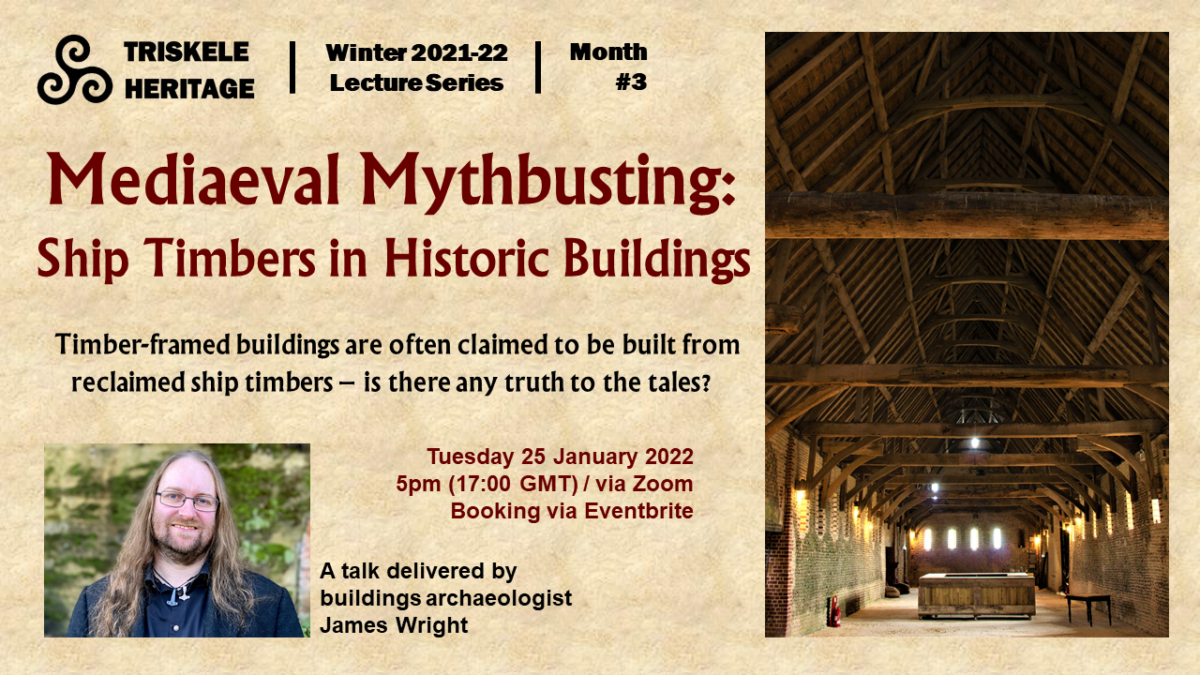
  • Ship Timbers in Historic Buildings

    Ship Timbers in Historic Buildings

    The third in the Triskele Heritage 2021-22 Winter Series of lectures.

    Following on from the popular Lockdown Lectures which, ran from January to May 2021, this new series of monthly lectures by buildings archaeologist James Wright will examine commonly held myths about the mediaeval period.

    A visit to almost any timber-framed structure in the land will elicit a story that the building’s timbers were re-used from a wrecked ship. The tale is often elaborated to add a layer of enigma and romanticism by mentioning the Spanish Armada or battle of Trafalgar. Are these just harmless folktales or can we genuinely find the timbers of lost ships in the rafters of ancient buildings?

    The speaker, James Wright (Triskele Heritage), is an award winning buildings archaeologist. He has two decades professional experience of ferreting around in people’s cellars, hunting through their attics and digging up their gardens. He hopes to find meaningful truths about how ordinary and extraordinary folk lived their lives in the mediaeval period. He is the author of the popular Mediaeval Mythbusting Blog.

    All you need to do is register via Eventbrite and – when the time for the talk rolls around – grab your favourite beverage of choice, get comfy and enjoy.

    The event will take place at 17:00GMT on Tuesday 25 January 2022 .

    Booking is now available via Eventbrite.

    Due to our licensing agreement with Zoom tickets for each event will be limited to 495 places. If you cannot make it after booking, please do return your ticket so that someone else can enjoy the talk instead.

    Please note that this live event will not be recorded and made available online afterwards.

    If you have a question about the event – in the first instance please see our FAQs section. The answer will almost certainly be in there.

    *** If you have any problems accessing this event please email with your booking reference to james@triskeleheritage.com ***

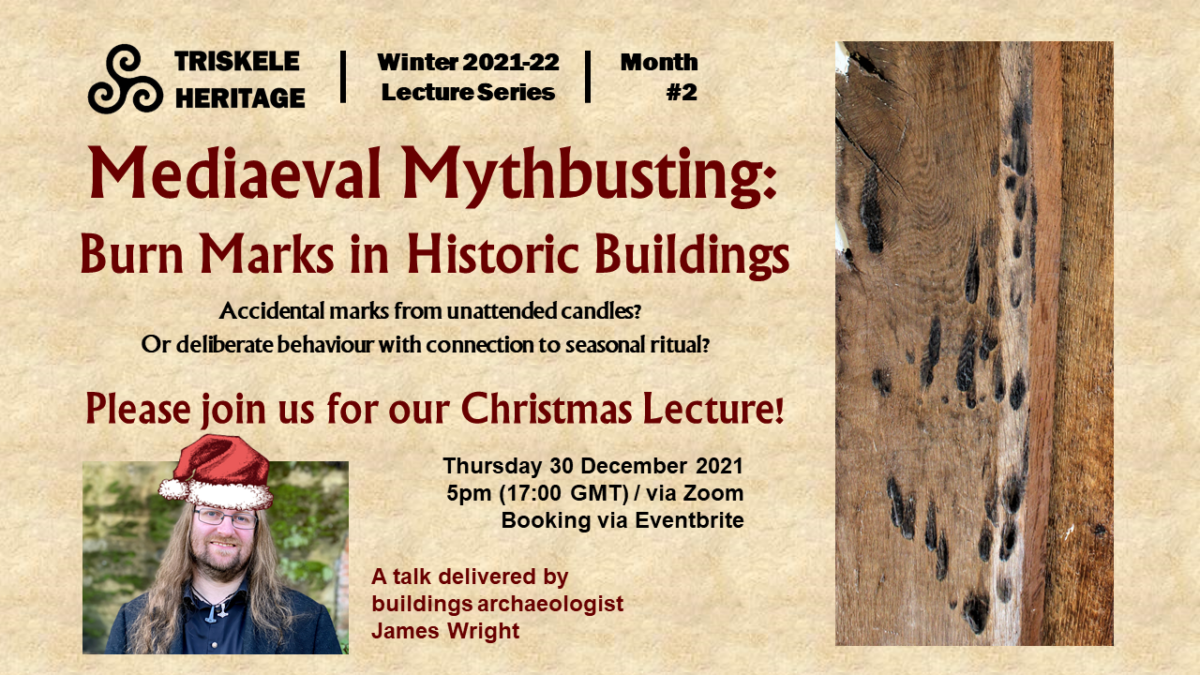
  • Burn Marks in Historic Buildings

    Burn Marks in Historic Buildings

    Are burn marks in historic buildings the result of careless accidents or deliberate rituals?

    The second in the Triskele Heritage 2021-22 Winter Series of talks will also be our Christmas Lecture!

    Following on from the popular Lockdown Lectures which, ran from January to May 2021, this new series of monthly lectures by buildings archaeologist James Wright will examine commonly held myths about the mediaeval period.

    Have you ever noticed strange, tear-shaped scorch marks on timbers in historic buildings? Most people tend to assume that they were left their by the unattended candles of careless occupants. Based on fieldwork survey, research and experimental archaeology this talk investigates a school of thought that suggests such marks are evidence of a number of ritual practices in the mediaeval and early modern periods linked to a desire to bring good luck and avert evil…

    The speaker, James Wright (Triskele Heritage), is an award winning buildings archaeologist. He has two decades professional experience of ferreting around in people’s cellars, hunting through their attics and digging up their gardens. He hopes to find meaningful truths about how ordinary and extraordinary folk lived their lives in the mediaeval period. He is the author of the popular Mediaeval Mythbusting Blog.

    All you need to do is register via Eventbrite and – when the time for the talk rolls around – grab your favourite beverage of choice, get comfy and enjoy.

    The event will take place at 17:00GMT on Thursday 30 December 2021 .

    Booking is now available via Eventbrite.

    Due to our licensing agreement with Zoom tickets for each event will be limited to 495 places. If you cannot make it after booking, please do return your ticket so that someone else can enjoy the talk instead.

    Please note that this live event will not be recorded and made available online afterwards.

    If you have a question about the event – in the first instance please see our FAQs section. The answer will almost certainly be in there.

    *** If you have any problems accessing this event please email with your booking reference to james@triskeleheritage.com ***
  • “The instruments of darkness tell us truths”

    “The instruments of darkness tell us truths”

    Ritual protection marks at Knole, Kent

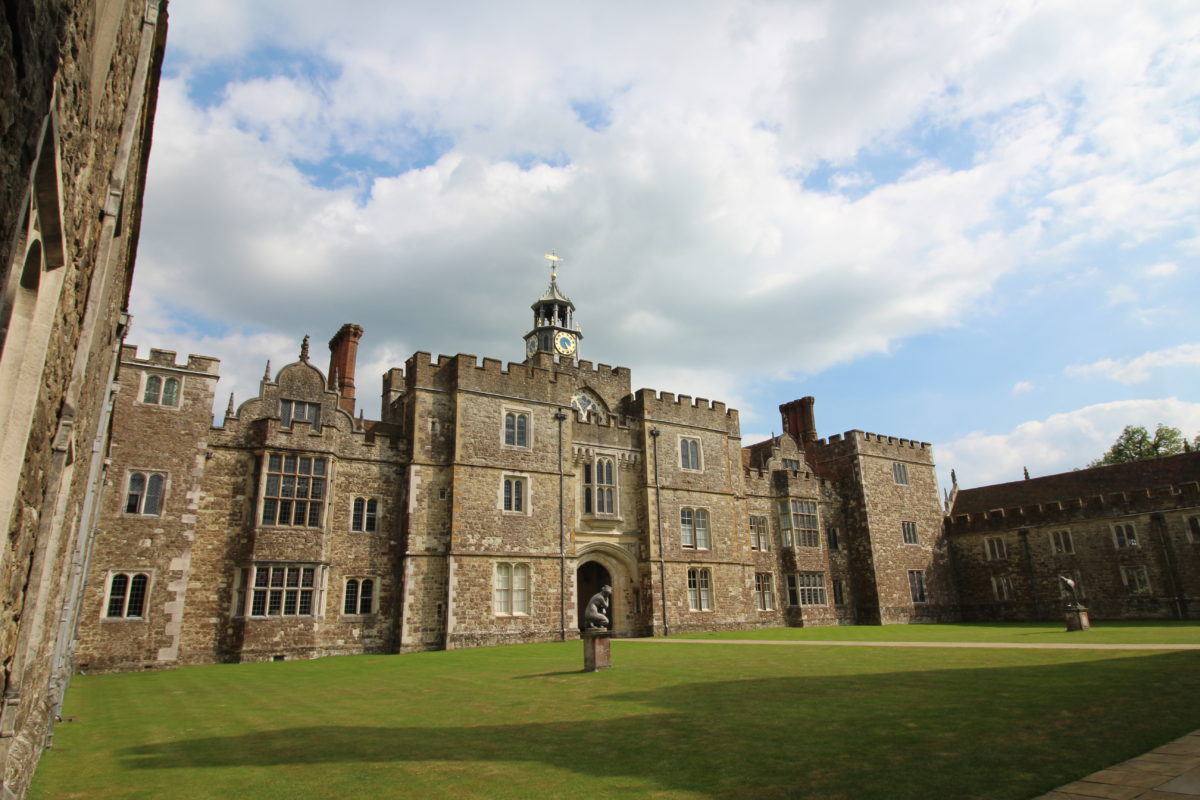
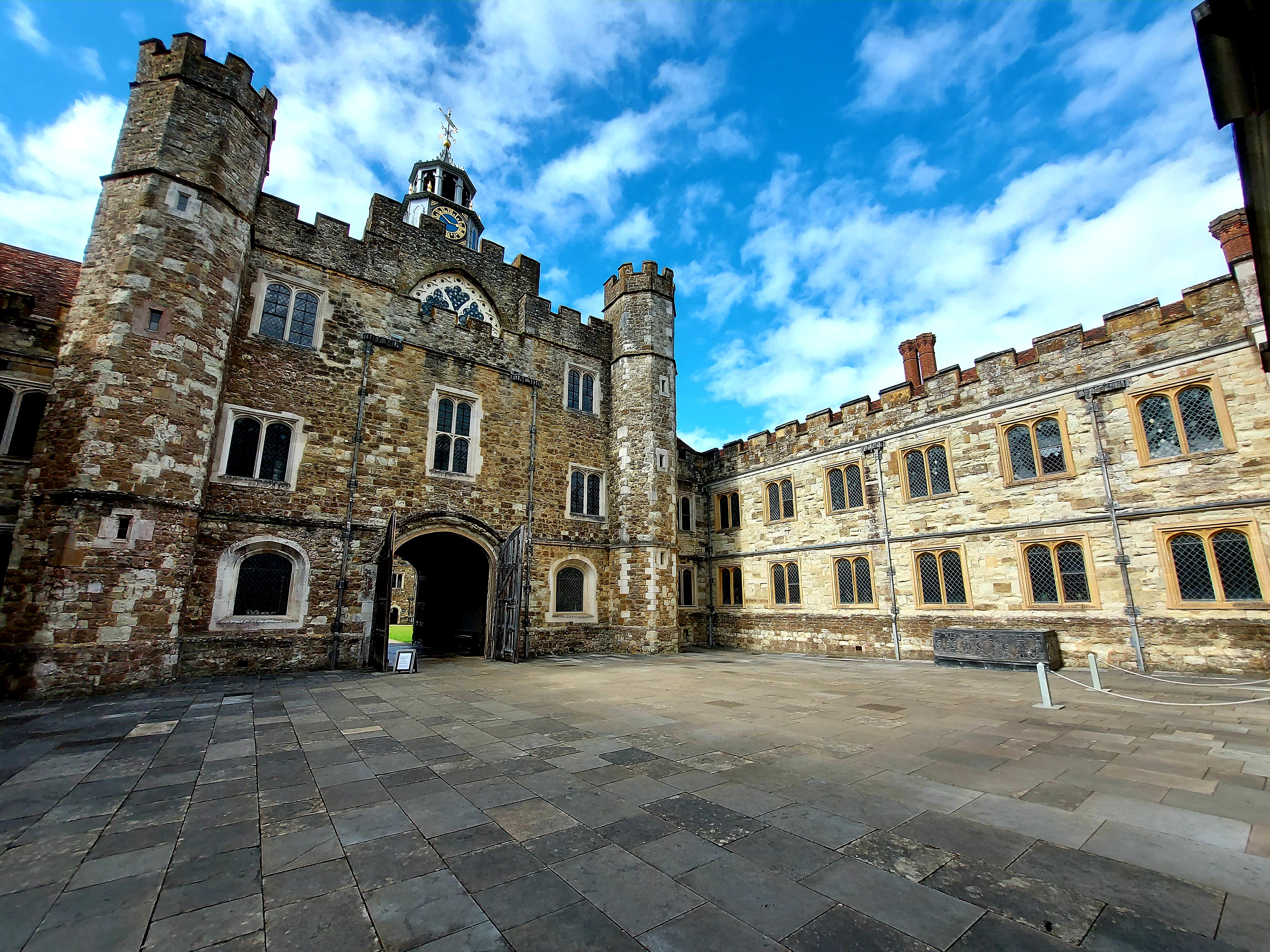
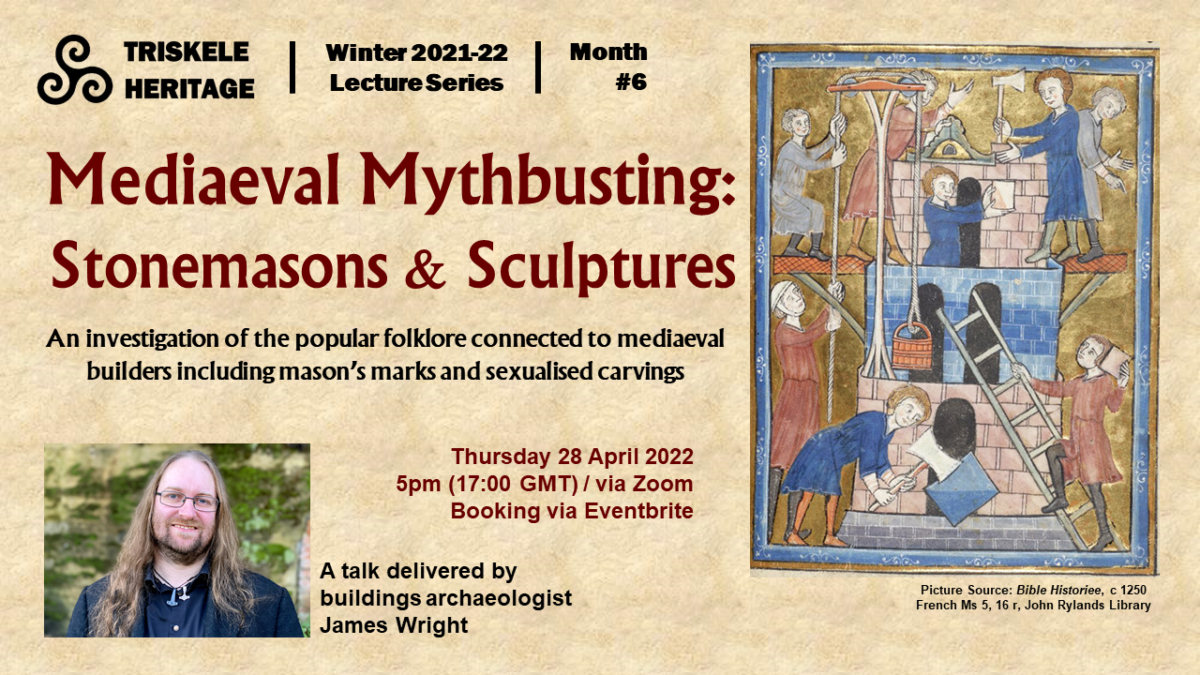
    An historic building survey at Knole, Kent enabled a very surprising revelation about the history of the house in the early 17th century. A series of symbols beneath the floorboards carved by the carpenters working at the house were intended to protect the building from possession by witches, demons and evil spirits. Further research showed that the symbols were related to James I, witch trials and the Gunpowder Plot.

    This lecture is available to view online via Gresham College

    To book this lecture for an in-person or online event please do get in contact

  • Cultural Anxieties and Ritual Protection in High Status Early Modern Houses

    Cultural Anxieties and Ritual Protection in High Status Early Modern Houses

    The sixteenth and seventeenth centuries were marked by a radical increase in the numbers of accusations of witchcraft throughout Europe. Evil incarnate was a real fear for the populace leading to a raft of folk-traditions being employed to protect house and home from possession.

    Using the case studies of the Tower of London and Knole, Kent this lecture presents and explains how the houses of the rich were given spiritual protection from demonic forces.

    To book this lecture for an in-person or online event please do get in contact

  • Dealing with the Devil

    Dealing with the Devil

    The Hellish Fears of Mediaeval & Early Modern Britain

    An overview of just why folk were so terrified of demonic threats to their world in the late mediaeval and early modern periods (c 1350 – c 1700). Given such a widespread and genuine belief that the Devil was stalking the land, this lecture looks at the various ways in which people attempted to protect their buildings from evil.

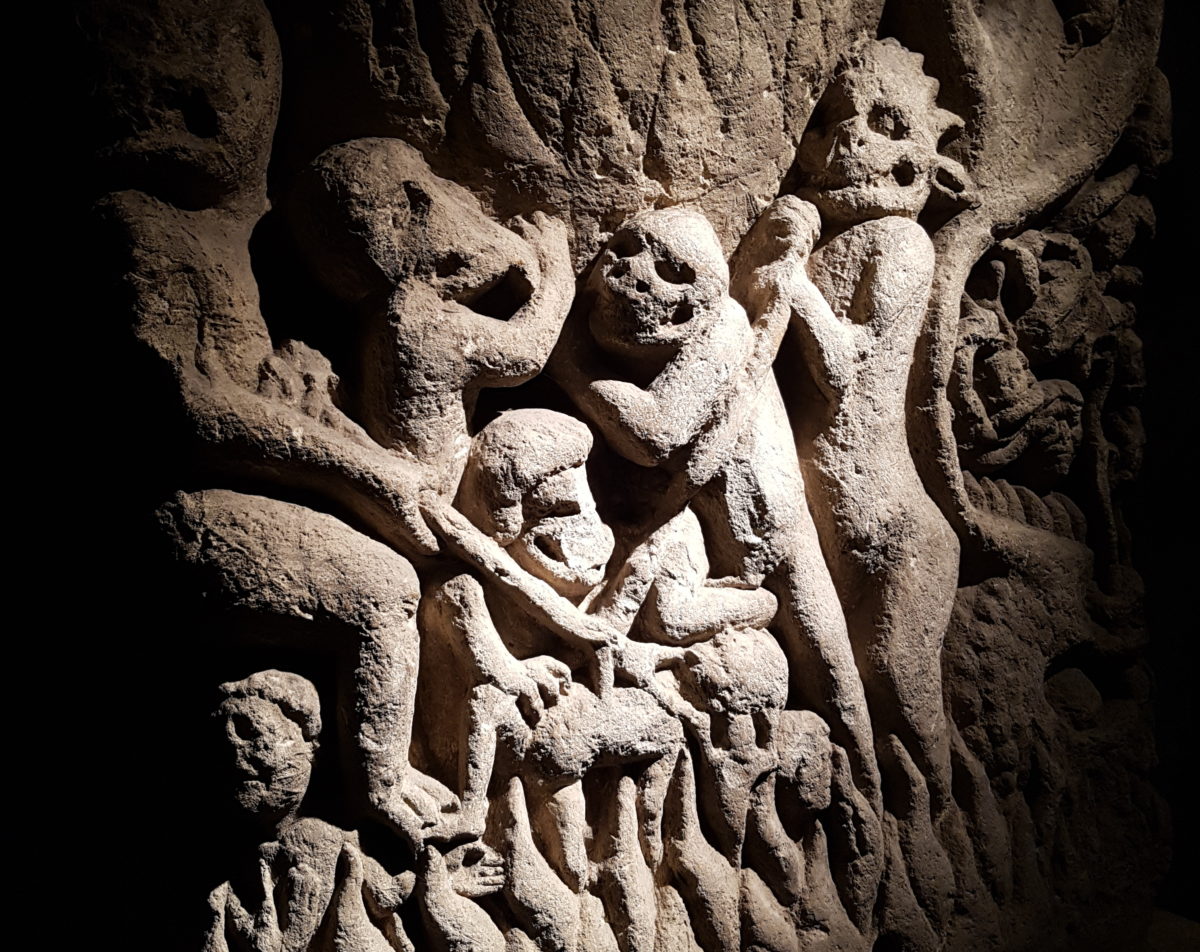
    These folk traditions often leave tangible remains in the archaeological record including ritual protection graffiti, concealed artefacts and burn marks on the walls. The discovery and interpretation of such finds allows us to trace the lost belief systems connected to the fear of Satan himself…

    To book this lecture for an in-person or online event please do get in contact

  • Spiral Staircases in Castles

    Spiral Staircases in Castles

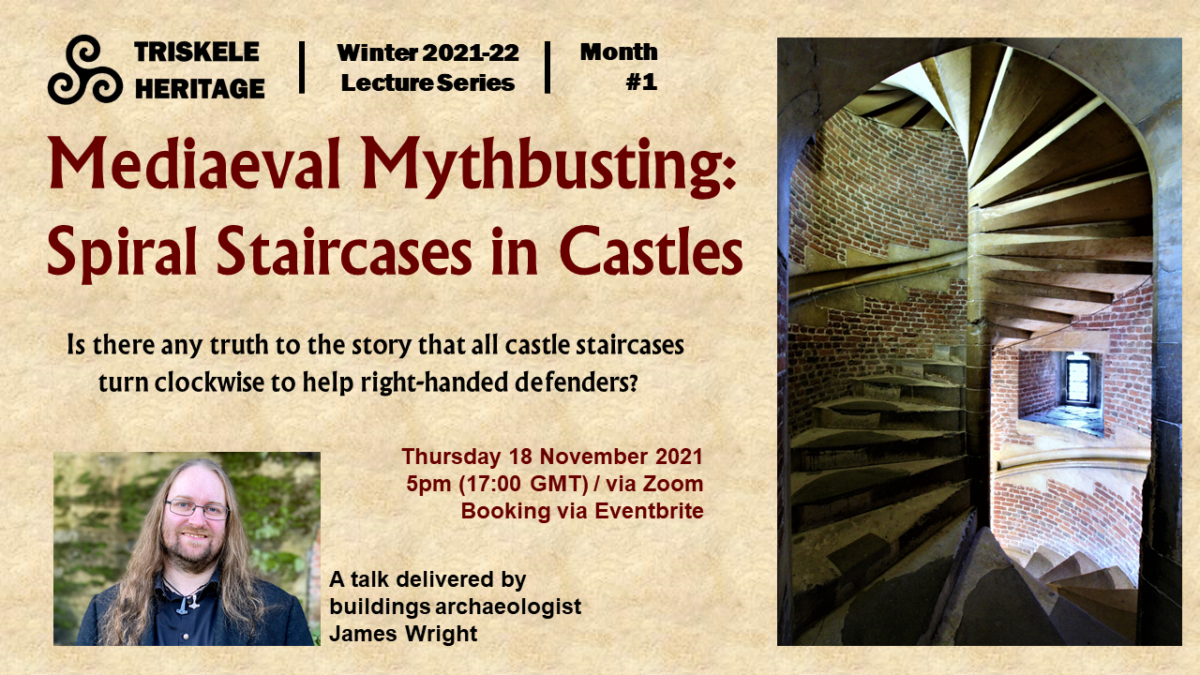
    Is there any truth to the story that all castle staircases turn clockwise to help right-handed defenders?

    The first in the Triskele Heritage 2021-22 Winter Series of lectures.

    Following on from the popular Lockdown Lectures which, ran from January to May 2021, this new series of monthly lectures by buildings archaeologist James Wright will examine commonly held myths about the mediaeval period.

    A widely repeated story holds that all staircases in mediaeval castles turn clockwise so that right-handed defenders were free to swing their weapons at an opponent, whereas any attackers trying to advance up the stair would find their sword arm hampered by the central newel post. Is there any truth to this story? Were castle staircases really designed to be a military feature? Do anti-clockwise staircases exist? Are there any other explanations? How and why did this story develop?

    The speaker, James Wright (Triskele Heritage), is an award winning buildings archaeologist. He has two decades professional experience of ferreting around in people’s cellars, hunting through their attics and digging up their gardens. He hopes to find meaningful truths about how ordinary and extraordinary folk lived their lives in the mediaeval period. He is the author of the popular Mediaeval Mythbusting Blog.

    All you need to do is register via Eventbrite and – when the time for the talk rolls around – grab your favourite beverage of choice, get comfy and enjoy.

    The event will take place at 17:00GMT on Thursday 18 November 2021 .

    Booking is now available via Eventbrite.

    Due to our licensing agreement with Zoom tickets for each event will be limited to 495 places. If you cannot make it after booking, please do return your ticket so that someone else can enjoy the talk instead.

    Please note that this live event will not be recorded and made available online afterwards.

    If you have a question about the event – in the first instance please see our FAQs section. The answer will almost certainly be in there.

    *** If you have any problems accessing this event please email with your booking reference to james@triskeleheritage.com ***

  • Happy Historic International Cat Day

    Happy Historic International Cat Day

    Here at Triskele Heritage we love a cat! The office is often home to our three black rescue cats, but we’re always on the lookout for cats at historic sites too. We’d like to celebrate International Cat Day (8 August) with a post about these archaeologically-inclined felines…

    The Triskele Heritage cats – Spike, Puddle & Pippin

    Cats have been constant companions for humans in the historic built environment for many centuries. Evidence for this comes from documentary references, manuscript illustrations and even from graffiti. A particularly famous example can be found on one of the nave pillars at St Albans Cathedral in Hertfordshire. It is probably mediaeval in date – from when the building was a Benedictine abbey – and features an anatomically accurate cat caught midway through, what can only be described as, intimate grooming…

    Mediaeval graffito of a cat washing itself, St Albans Abbey, Hertfordshire

    Such a graffito may have been carved by one of the monks or perhaps a visitor to the site. It represents an observation of the contemporary life at the cathedral in the mediaeval period. That world would have included cats who would have been encouraged to roam about the building to help keep down the rodent population.

    Evidence of ratters and mousers comes from holes which were sometimes incorporated in ancient doors. The most famous of these can be found at Exeter Cathedral in Devon. A door has been altered to allow cats to enter the staircase leading up to a mediaeval clock – perhaps the cathedral’s rodents had been playing merry hell with the ropes of the mechanism!

    Cat hole at Exeter Cathedral

    In the fifteenth century there was even a cat on Exeter Cathedral’s payroll – earning a penny a week! A graffito at Southwell Minster in Nottinghamshire graphically shows exactly what it was that the cathedral cats were expected to hunt…

    Graffito of a rat or mouse at Southwell Minster

    It would seem that it was not just the cathedrals which employed cats. Rats and mice were to be found everywhere in mediaeval England and folk were keen to try and protect their homes. This was the case even at the top end of society. The bishop of Lincoln’s residence at Lyddington in Rutland has a cat hole cut through the bottom of a door in the bishop’s own private quarters to allow access by the all-important cats.

    Cat hole at Lyddington

    We recently recorded a similar historic cat hole in a private house in Worcestershire. Cats are still very much to be found in the historic built environment. The most famous of these was probably, the recently deceased, Doorkins Magnificat (R.I.P.) who was taken in by the community at Southwark Cathedral in south London. She had her work cut out chasing the rodents as the site is bounded by the River Thames on one side and Borough Market on the other! Most of the time she could be found snoozing in various warm spots around the building though.

    Doorkins Magnificat snoozing at Southwark Cathedral

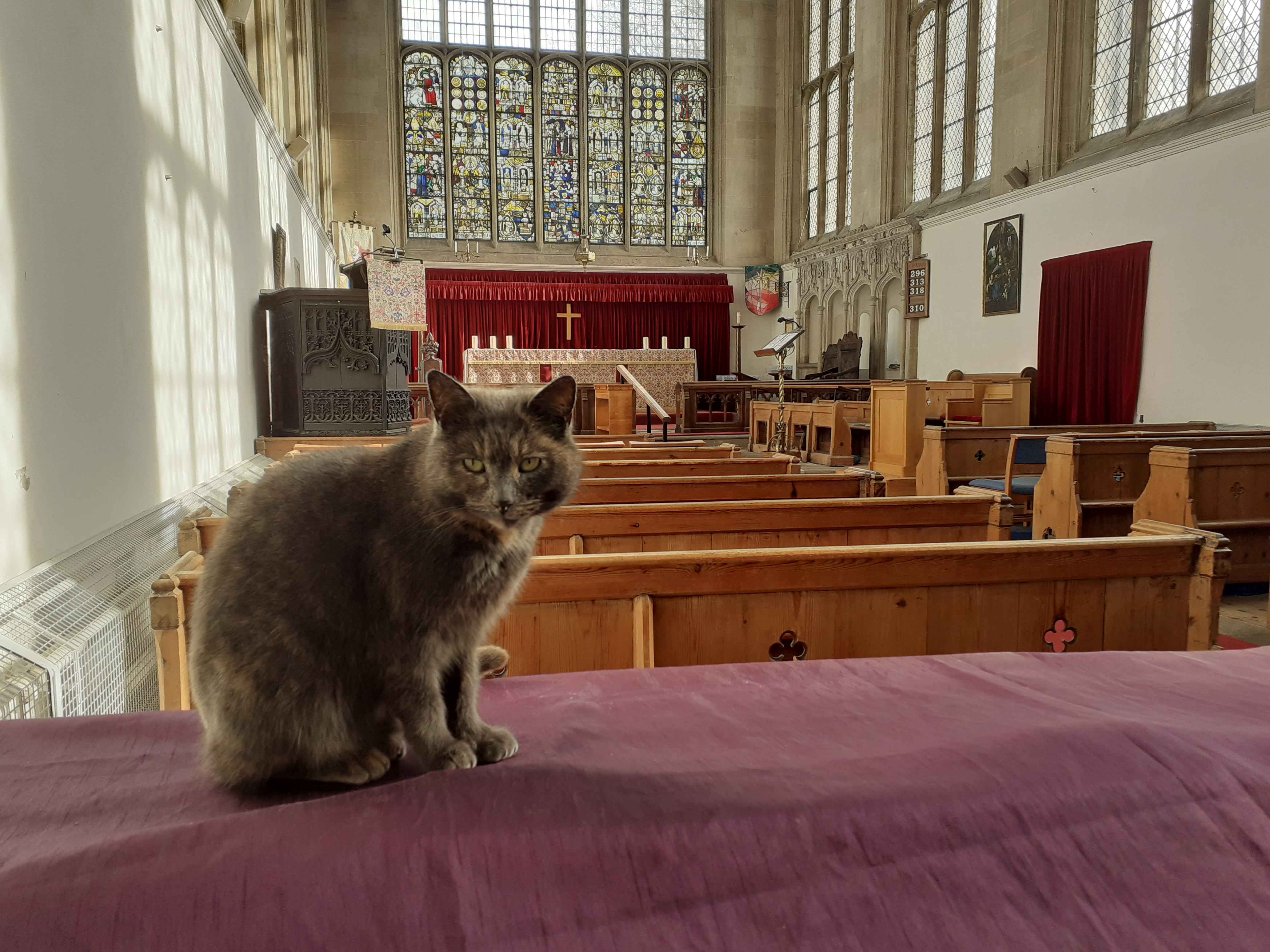
    We’ve encountered many other cats at historic properties including Old Wardour Castle (Wiltshire), Tattershall Castle (Lincolnshire) and Wells Cathedral (Somerset). It’s always a great moment in every site visit to meet a feline who lives and works at these heritage properties and well worth taking a moment to spend some time with them.

    James Wright of Triskele Heritage making a new friend at Old Wardour Castle
    Pipsy stalking the Inner Ward bridge at Tattershall Castle
    Pangur the Wells Cathedral cat

    So, on International Cat Day, we salute the felines who inhabit our historic monuments!

  • One Day Historic Building Surveys: Uncover the Archaeology of Your House

    One Day Historic Building Surveys: Uncover the Archaeology of Your House

    Triskele Heritage are now offering one day building surveys for the owners of historic buildings.

    This service is carried out by award-winning buildings archaeologist James Wright – who has over 20 years of professional experience in the field. It includes a full day on site to assess the physical structure, take high quality photographs and analyse the form, function, materials and phasing of the building.

    The day then concludes with a tour of the building to outline the archaeological findings, point out interesting features and offer comment on the date and phasing of the property.

    Our one day surveys are a quick and relatively inexpensive option which can enable landowners to find out more about the history and archaeology of their properties.

    The survey could also form the basis for the production of an optional report on the structure.

    To find out more about our one day surveys, please do get in contact

    Please do have a look at our testimonials page to see what our clients have made of our services…